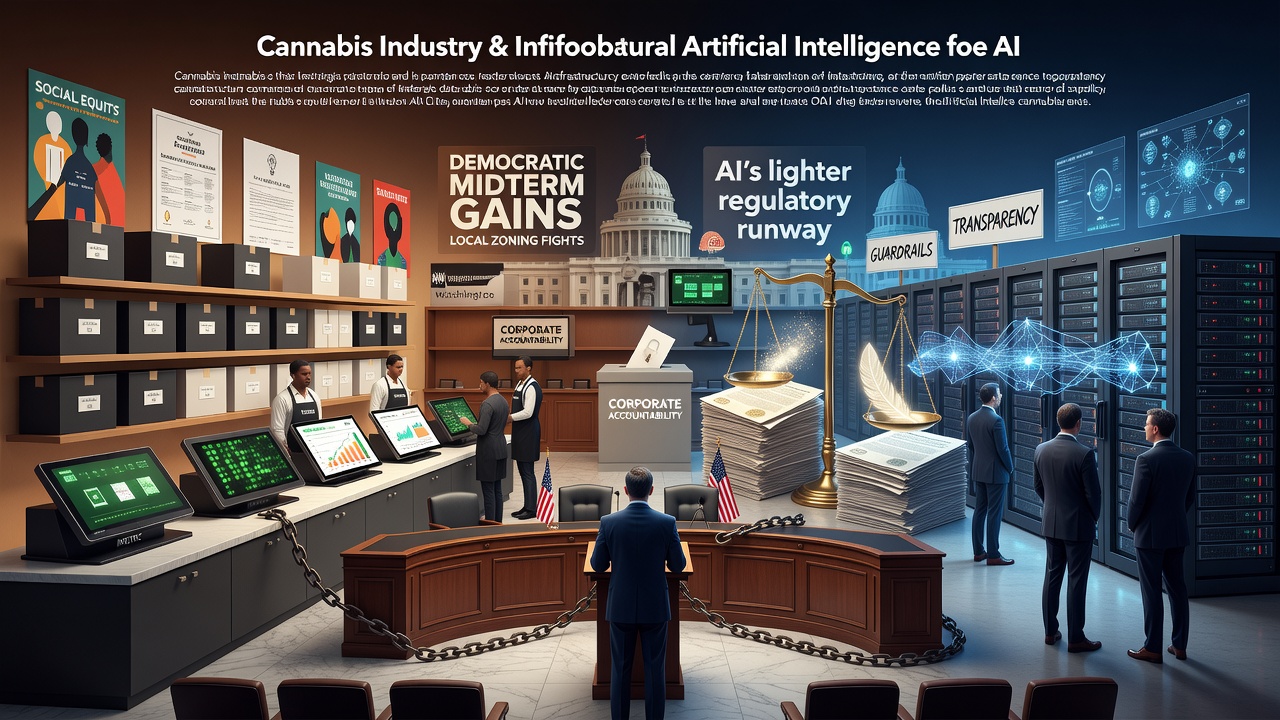
Washington is about to pivot from a hands-off posture on artificial intelligence to something far more adversarial, and the ripple effects reach well beyond Silicon Valley. Democratic gains in the midterms, built in part on promises to rein in AI and data-center expansion, signal a regulatory mood shift that cannabis operators should not dismiss as someone else's fight. The thing is, the same political energy now targeting AI giants - distrust of unchecked corporate growth, demand for local accountability, concern over who bears the costs of rapid industry expansion - has already shaped cannabis policy for a decade.
A Familiar Regulatory Pattern
Cannabis operators know this script. States that legalized adult-use sales didn't hand operators a blank check; they built out licensing caps, social equity requirements, seed-to-sale tracking through systems like METRC, and strict packaging and lab-testing rules before a single product hit a dispensary shelf. The AI sector, by contrast, scaled first and is only now facing the hearings, guardrails, and local ballot measures that cannabis businesses have operated under from day one. Rep. Ted Lieu's comments about holding public hearings and passing "reasonable guardrails" sound almost identical to language cannabis trade groups have heard directed at their own industry for years.
What's striking here is the sequencing. Cannabis compliance costs - COA requirements, compliant packaging, excise tax collection, point-of-sale reporting - were baked into the business model from the start, in large part because lawmakers didn't trust the industry to self-regulate after decades of prohibition. AI companies got the opposite treatment: years of light-touch policy followed by a sudden political reckoning. Dispensary operators who have spent years absorbing compliance overhead might reasonably ask why a newer, more capital-intensive industry got a longer runway.
Why This Matters for Cannabis Business Strategy
There's a practical angle here too. Many multi-state operators now rely on AI-driven tools for inventory forecasting, SKU management, dynamic wholesale pricing, and fraud detection across point-of-sale terminals. If Congress moves to impose federal guardrails on AI development - covering data-center energy use, algorithmic transparency, or consumer protection - the software vendors serving cannabis retail will face new compliance burdens of their own. Those costs tend to flow downstream to the operators who license the technology.
In practice, though, the bigger lesson may be about political momentum. Voters rewarding candidates who campaigned on corporate accountability and local control is not a new phenomenon in regulated industries; cannabis retailers have lived inside that dynamic since legalization began, fielding zoning fights, license caps, and social equity mandates shaped by local political pressure. The AI sector is now entering that same terrain, and the regulatory instincts Congress develops - on transparency, voluntary-versus-mandatory standards, and corporate accountability - could eventually inform how lawmakers approach other fast-growing, still-maturing industries, cannabis included.
What Operators Should Track
- Federal hearings on AI could set precedent for how Congress approaches other under-regulated or newly regulated sectors, including cannabis banking and payments reform.
- Software vendors supplying seed-to-sale tracking, POS systems, and compliance logs may face new data and energy-use disclosure requirements if AI oversight expands.
- State-level ballot measures limiting data-center construction show voters are willing to impose local restrictions on fast-growing industries - a dynamic cannabis retailers already navigate with zoning and license caps.
- Voluntary industry commitments, like those OpenAI announced after Election Day, often precede mandatory rules - a pattern cannabis operators have seen with packaging, marketing, and testing standards.
None of this means cannabis and AI regulation will merge into one policy conversation. But the political forces now pressuring AI giants - public hearings, bipartisan skepticism of unchecked growth, local control over infrastructure - are the same forces that have already defined cannabis retail. Operators who understand that pattern may be better positioned to anticipate the next regulatory wave, whatever sector it targets next.